Key Takeaways
- Marketing reporting tools play a critical role in streamlining data collection and visualization by unifying insights from multiple channels like Google Analytics, Mailchimp, and social media platforms.
- Selecting the best marketing reporting tools can significantly improve productivity by automating data tracking, reducing manual reporting, and enhancing the accuracy of marketing performance analysis.
- Determining which is the best reporting tool in the market depends on your business goals. Solutions like ViewMetrics, TapClicks, and AgencyAnalytics suit marketing teams, while Tableau and Zoho Analytics excel at enterprise-level insights.
- The right tool for you is one that offers seamless integrations, real-time dashboards, customizable metrics, and scalability to support business growth and cross-channel visibility.
- Investing in the right tool enables smarter decision-making, clearer campaign evaluation, and measurable improvements in marketing ROI across all digital channels.
Are you juggling between social media marketing, email campaigns, and website analytics? Tracking performance across multiple channels can be overwhelming without the right tool. Moreover, if you pick the best marketing reporting tools, you can avoid the struggle of consolidating data, analysing results, and producing client-ready reports!
These tools automatically collect data from multiple sources and generate comprehensive reports that help you make better decisions. The right tool can transform how you measure success and plan future campaigns.
What are Marketing Reporting Tools?
Marketing reporting tools are software solutions designed to consolidate, analyze, and present marketing data from multiple platforms. They help teams track campaign performance, monitor KPIs, and generate reports quickly. Their key benefits include:
- Centralized view of all marketing channels
- Accurate and consistent data through automated reporting
- Clear visualizations of complex data for better decision-making
- Customizable dashboards tailored to team or client needs
These tools eliminate the need for manual spreadsheet tracking, allowing you to focus on strategy and optimization rather than repetitive reporting tasks.
13 Best Marketing Reporting Tools
Before diving into detailed reviews, here’s a quick comparison of the best reporting tools in the market in 2026. This table gives you an at-a-glance view of their top features, ideal use cases, and pricing.
| Tool | Best Used for | Key Features | Pricing |
| ViewMetrics | Marketing Reporting Tools | Google Sheets/Slides integration, customizable templates, multi-client dashboards | Starting from $19 monthly |
| TapClicks | Centralized marketing operations | 250+ integrations, smart connector, AI-driven insights | Starting from $99 monthly |
| Improvado | Enterprise-level data integration | 500+ integrations, AI agents, BI/analytics support | On-demand |
| Whatagraph | Visual reporting for agencies | AI report generator, cross-platform reporting, white-labeling | Start: $230 monthlyBoost: $577 monthly |
| AgencyAnalytics | Automated client reporting for agencies | 80+ integrations, AI insights, customizable dashboards, white-labeling | Freelancer: $59 monthlAgency: $179 monthly
Agency Pro: $349 monthly Enterprise: Customized |
| Salesforce | CRM and marketing analytics | CRM features, marketing automation, and detailed reporting | Subscription-based |
| Domo | Business intelligence | Cloud-based analytics, real-time data, mobile access | On-demand |
| Tableau | Advanced data visualization | Interactive dashboards, real-time analytics, and extensive integrations | Viewer: $15 per user monthlyExplorer: $42 per user monthly
Creator: $75 per user monthly |
| Zoho Analytics | Business intelligence | Customizable reports, data blending, AI-driven insights | Basic: $11 monthlyStandard: $21 monthly
Premium: ₹47 monthly Enterprise: $180 monthly |
| Google Analytics (Looker Studio) | Website tracking and campaign performance | Customizable dashboards, data blending | Free |
| Supermetrics | Data extraction and analytics | Connects marketing platforms to BI/Sheets, automated data pulls | $40 monthly |
| DashThis | White-labeled dashboards and reports | Drag-and-drop dashboards, multiple integrations, automated report scheduling | Individual: $49 monthlyProfessional: $159 monthly
Business: $309 monthly Standard: $479 monthly |
| Metrics Watch | Centralized dashboards for agencies | Automated metrics updates, real-time dashboards, multi-platform reporting | $29 monthly |
13 Must-Have Marketing Reporting Tools in 2026
Managing data from multiple channels can be complex, but the right marketing reporting tools simplify it all. These platforms automate reporting, centralize insights, and help you make smarter marketing decisions.
Here’s a quick look at the best reporting tool in the market in 2026.
-
ViewMetrics
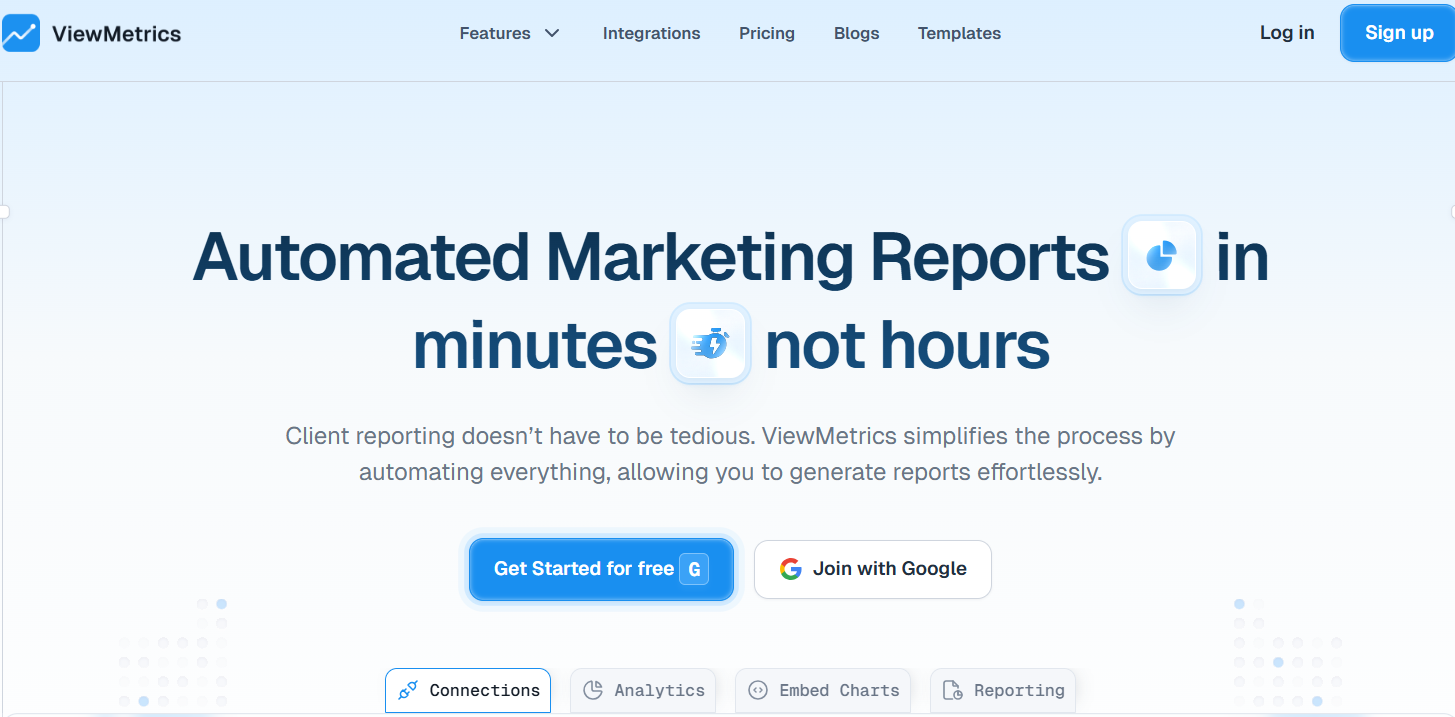
ViewMetrics provides a unified platform for agencies and marketers to consolidate marketing data from multiple channels. With a focus on automation and ease of use, it saves hours of manual reporting while ensuring accuracy across campaigns. It is undoubtedly one of the best marketing reporting tools in the market currently.Key Features:
- Automated Reporting: Generates ready-to-share reports automatically, freeing teams from repetitive tasks.
- Data Integration: Seamlessly connects to Google Analytics, Facebook Ads, email marketing platforms, and more.
- Customization: Users can design personalized dashboards and reports that reflect specific business goals.
- Data Visualization: Offers charts, graphs, and tables that make interpreting complex data simple.
- Integration With Other Tools: Works with Google Sheets and Slides for easy sharing and further analysis.
-
TapClicks

TapClicks is ideal for agencies seeking a centralized marketing operations platform. It combines data from multiple sources with AI-powered insights to help teams understand campaign performance in real time.Key Features:
- Consolidates over 250 marketing platforms into a single dashboard.
- Smart Connector automates data import and updates.
- AI-driven insights highlight trends and optimization opportunities.
- White-label reporting enables client-ready visualizations.
- Custom dashboards track KPIs relevant to specific campaigns or clients.
-
Improvado
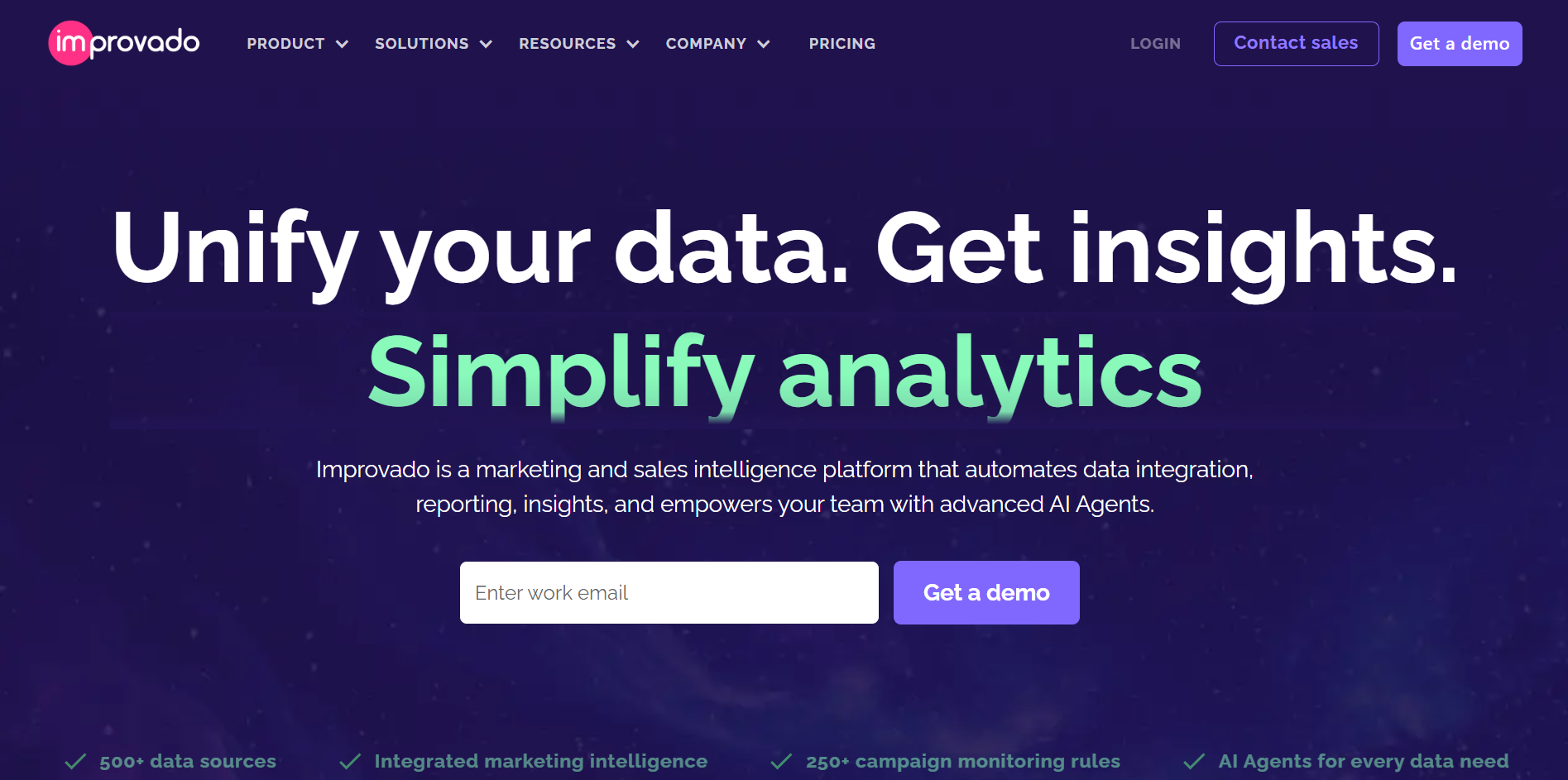
Improvado caters to enterprise teams requiring advanced data aggregation. It collects marketing metrics across channels into one system, enabling deep insights for decision-making.Key Features:
- Integrates with over 500 platforms.
- AI agents automate reporting and highlight anomalies in performance.
- Supports BI tools for complex analytics.
- Custom dashboards enable client-ready reporting and real-time insights.
-
Whatagraph

Whatagraph focuses on visually appealing reports that agencies can share with clients. It automates reporting across multiple platforms and simplifies data visualization.Key Features:
- AI-powered report generator for automated insights.
- Cross-platform reporting for social media, email, and website campaigns.
- White-label capabilities for branding purposes.
- Pre-built templates for faster setup and consistency.
-
AgencyAnalytics
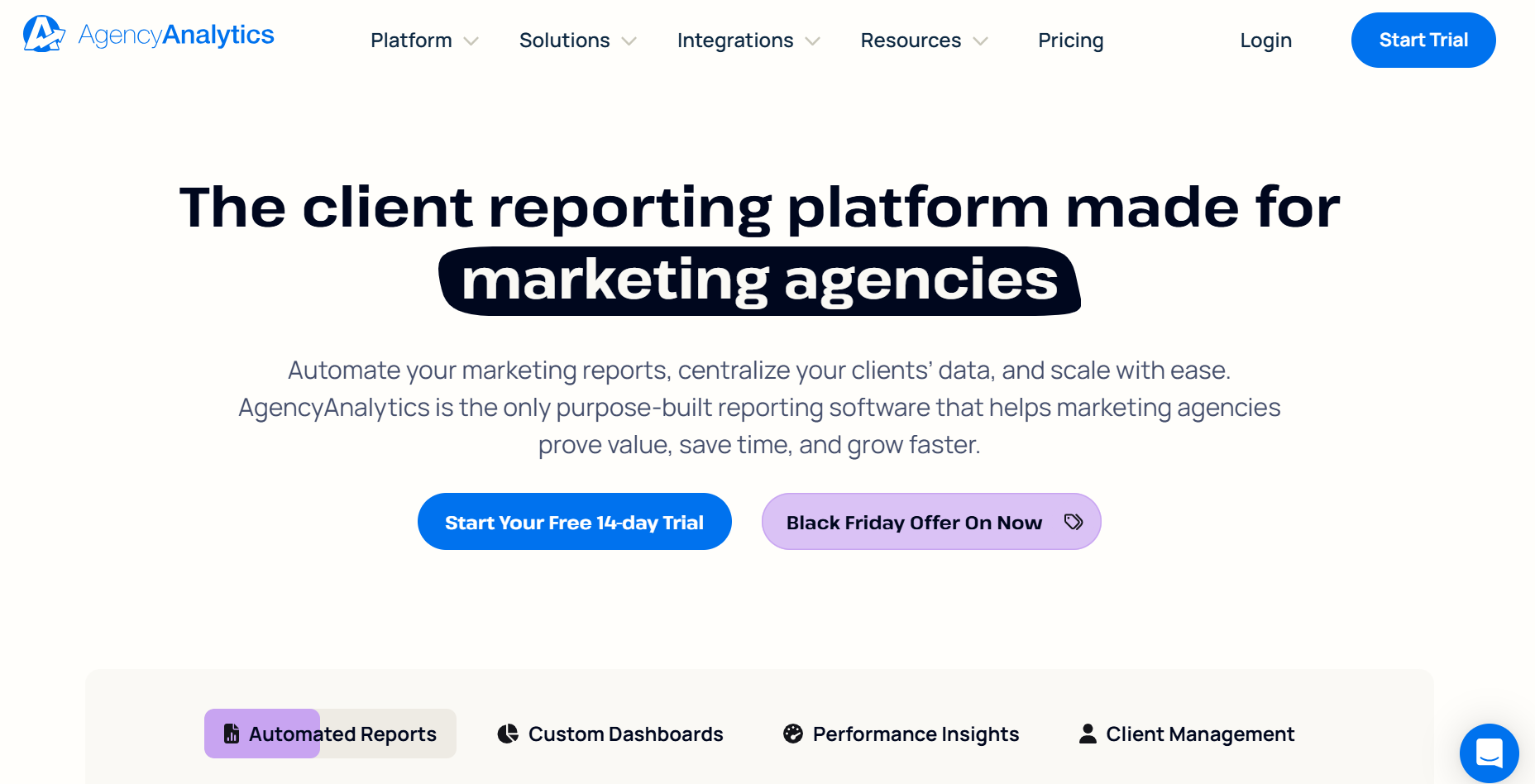
AgencyAnalytics streamlines client reporting with automation and custom dashboards. It is especially popular among small to medium-sized agencies managing multiple clients.Key Features:
- Integrates with 80+ marketing platforms.
- Provides AI insights for trend identification and campaign optimization.
- Custom dashboards for internal or client-facing reports.
- Automated scheduling ensures the timely delivery of reports.
-
Salesforce

Salesforce merges CRM and marketing analytics, allowing teams to manage campaigns, track leads, and monitor sales performance within one platform.Key Features:
- Comprehensive CRM and marketing automation.
- Detailed reporting across campaigns, leads, and customer journeys.
- Custom dashboards to monitor KPIs and track performance over time.
- Integrates with multiple marketing and sales tools.
-
Domo
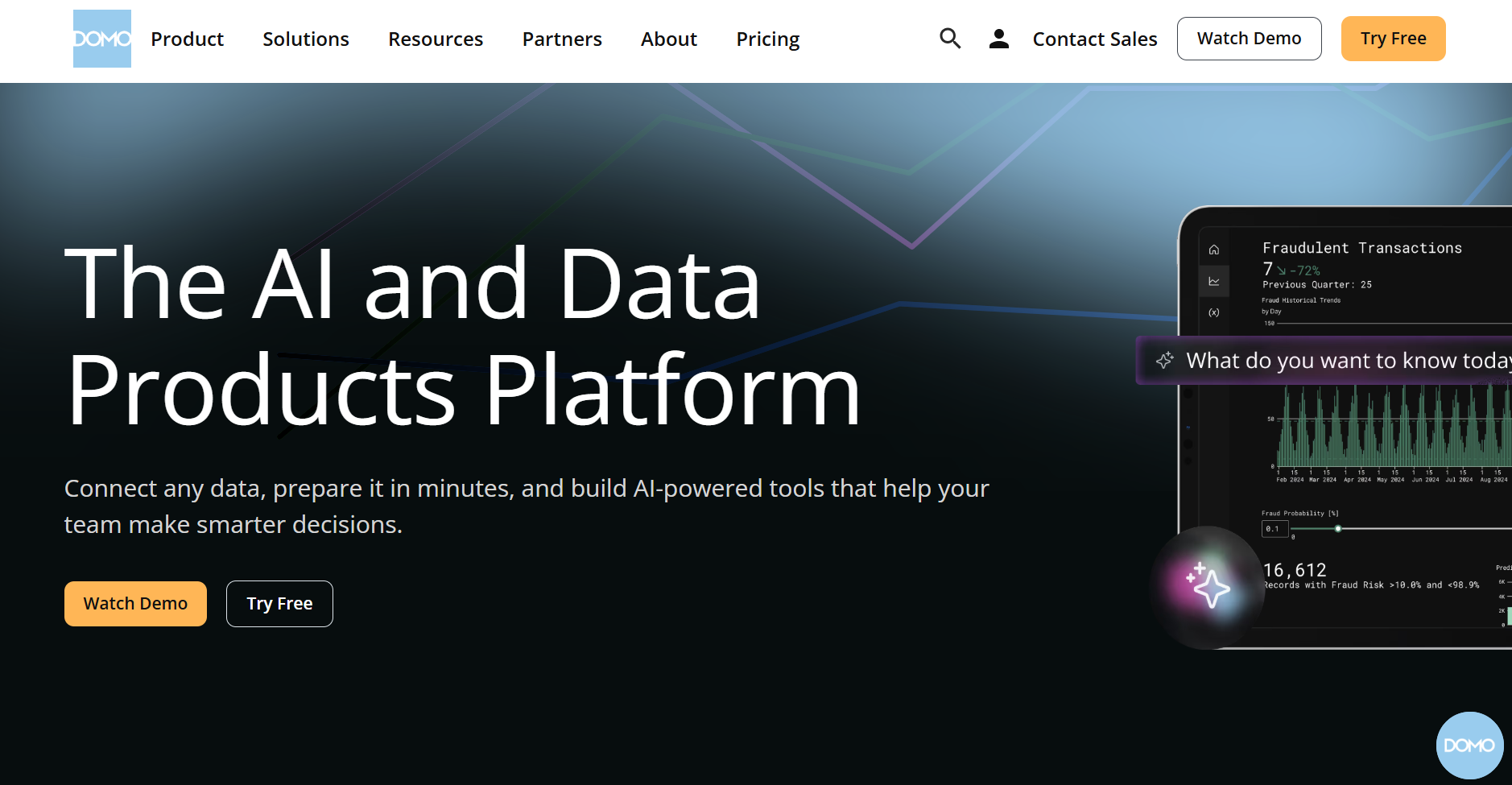
Domo is a cloud-based platform offering real-time analytics and visual dashboards. It is designed to centralize data and provide actionable insights quickly.Key Features:
- Centralized dashboards with live updates.
- Cloud access ensures data availability across devices.
- Multi-platform integration for comprehensive marketing analytics.
- Custom reports and visualizations for campaign tracking.
-
Tableau
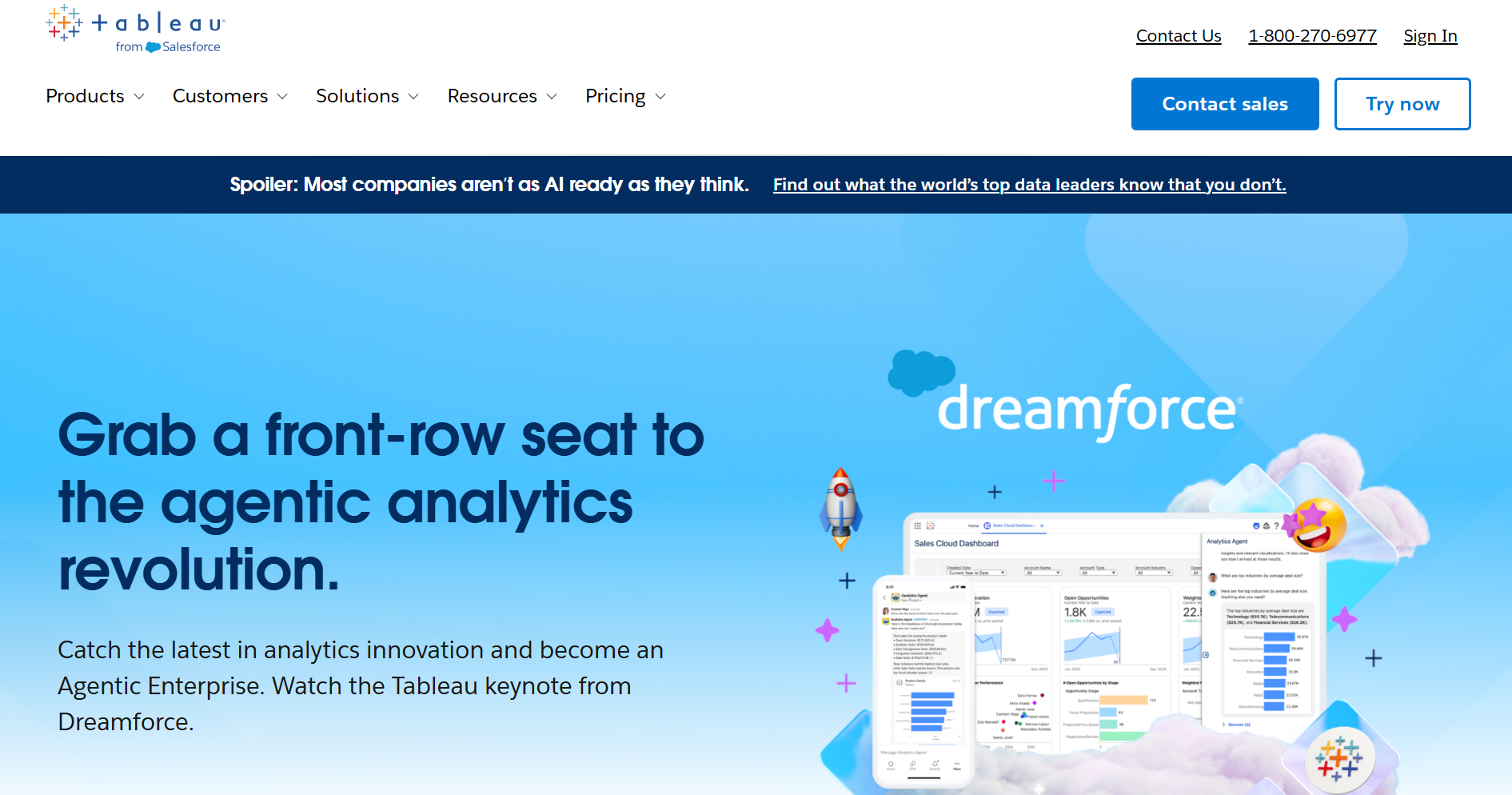
Tableau is a robust platform for advanced data visualization and analytics. It is ideal for enterprises that need interactive dashboards and detailed insights.Key Features:
- Real-time dashboards for campaign and operational data.
- Extensive integrations with marketing and analytics platforms.
- Interactive charts and visualizations for deeper insights.
- Enterprise-ready reporting for large teams.
-
Zoho Analytics
Zoho Analytics is an AI-powered business intelligence tool that converts marketing data into actionable insights.Key Features:
- Customizable dashboards and reporting with AI insights.
- Blends data from multiple marketing platforms.
- Scheduled automated reports for regular updates.
- Supports team collaboration and sharing for client reporting.
-
Google Analytics (Looker Studio)
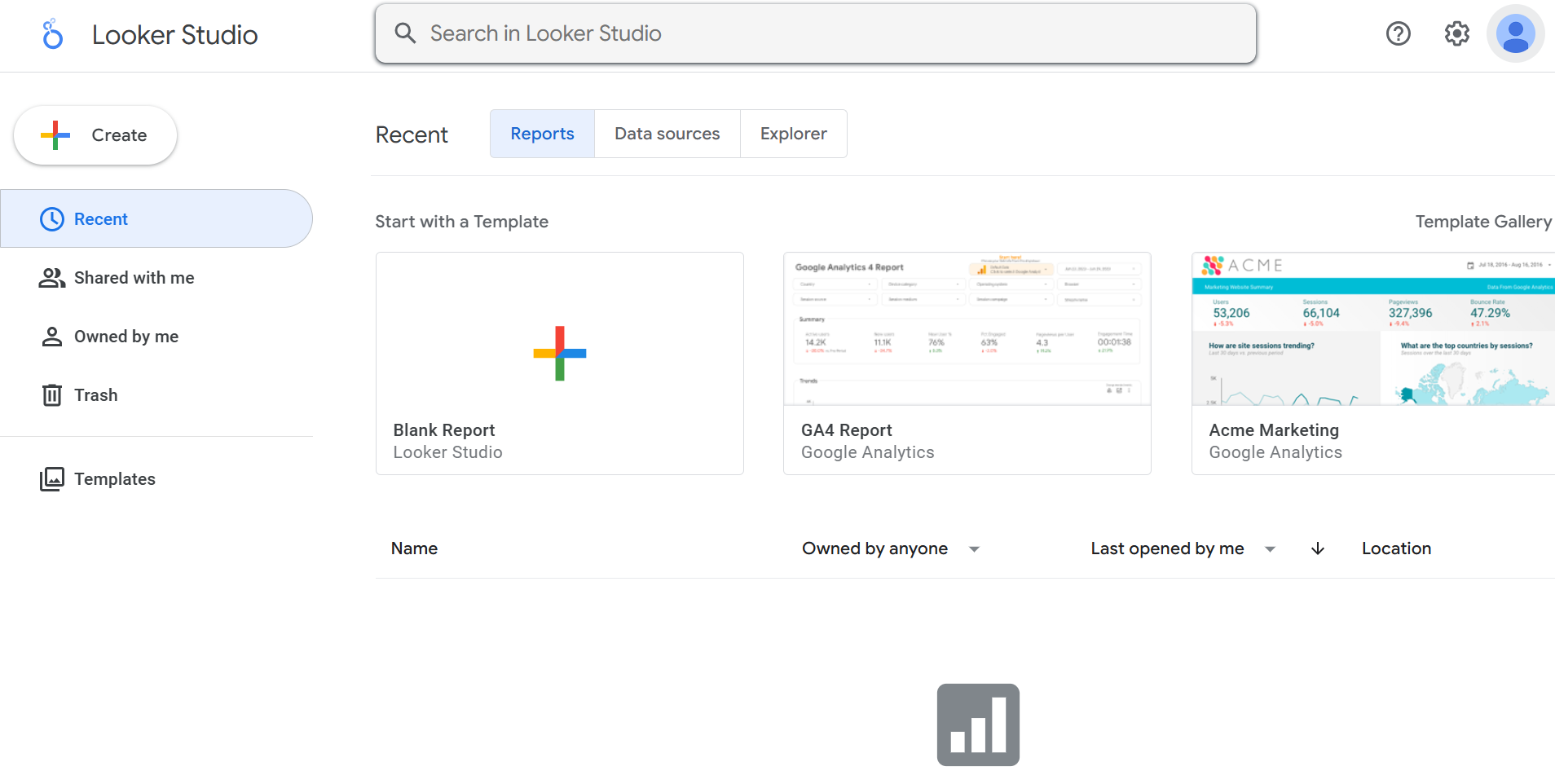
Google Analytics, combined with Looker Studio, is a free and reliable tool for tracking website and basic campaign performance.Key Features:
- Custom dashboards and reporting capabilities.
- Data blending from multiple sources for a comprehensive view.
- Automated and scheduled reports for efficiency.
- Ideal for small businesses or basic campaign tracking.
-
Supermetrics
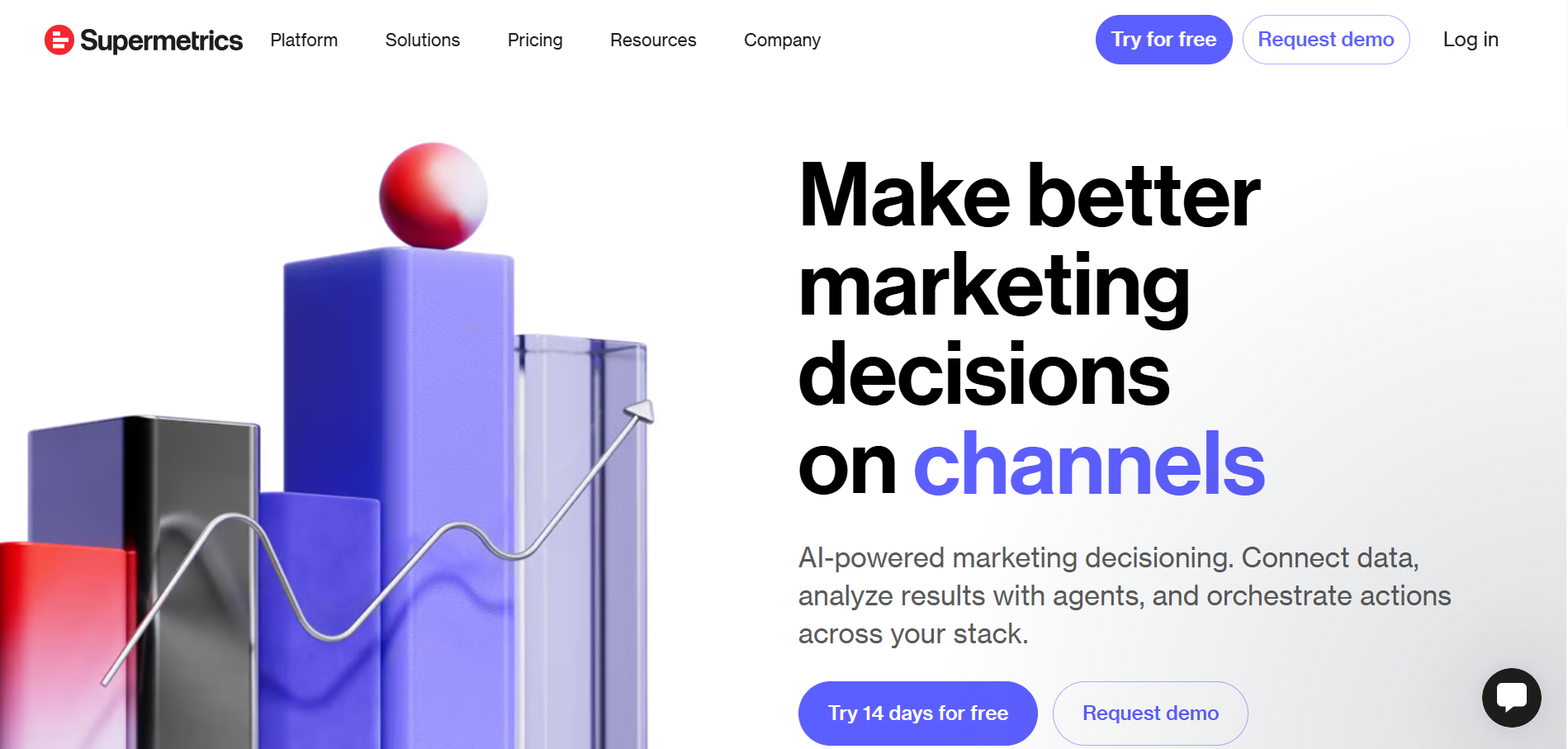
Supermetrics automates the extraction of marketing data into spreadsheets or BI tools, reducing manual work for marketers.Key Features:
- Connects multiple marketing platforms for automated data collection.
- Integrates with Google Sheets, Excel, and BI tools.
- Supports custom queries, dashboards, and reporting templates.
- Reduces manual errors and saves hours of reporting time.
-
DashThis
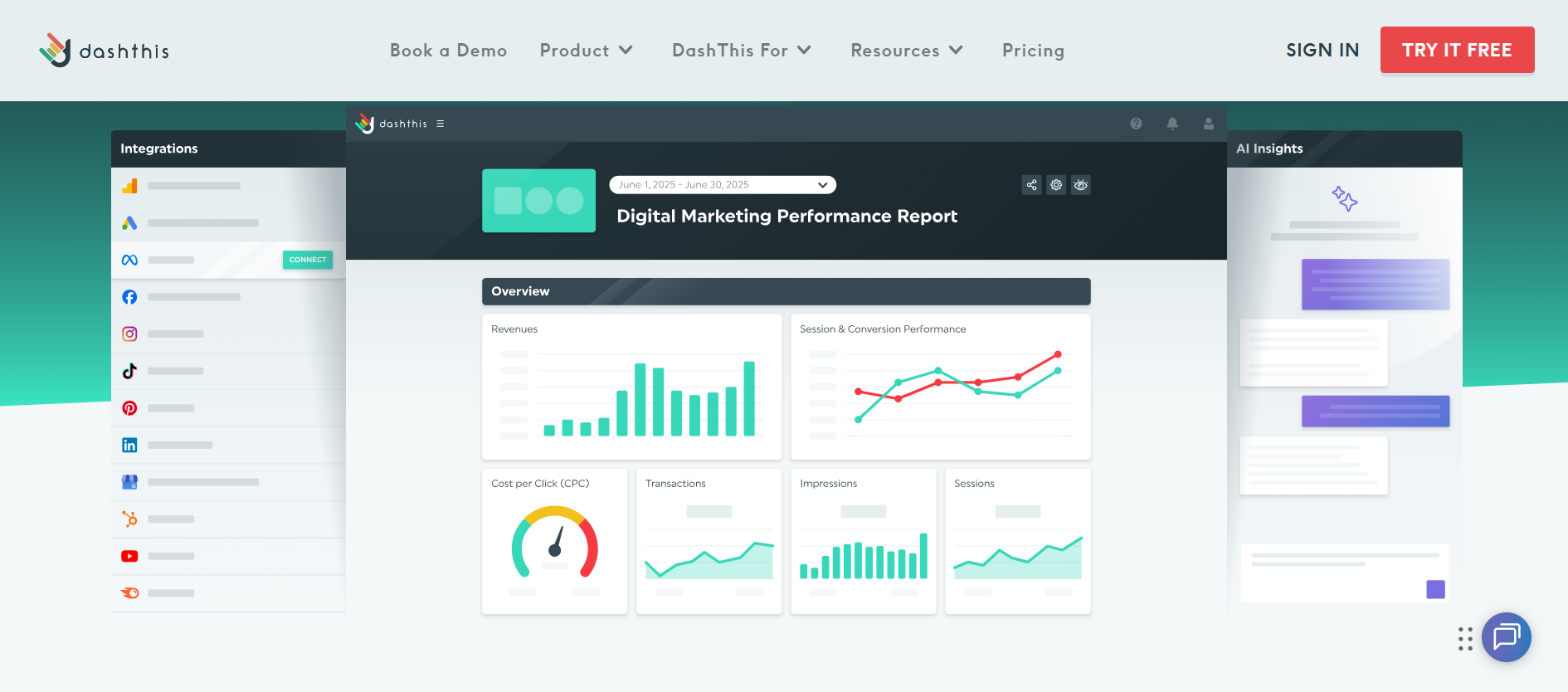
DashThis simplifies reporting for agencies with drag-and-drop dashboards and automation. It is designed for quick, client-ready reports.Key Features:
- White-labeled dashboards and reporting for branding.
- Multiple integrations across marketing platforms.
- Pre-built templates speed up report creation.
- Custom visualizations for clear campaign insights.
-
Metrics Watch
Metrics Watch offers real-time dashboards for agencies, making it simple to monitor multi-platform marketing performance.Key Features:
- Automated updates to reduce manual reporting.
- Centralized dashboards for real-time visibility.
- Multi-platform reporting in one interface.
- Custom visualizations to interpret metrics quickly.
Different Types of Digital Marketing Reporting Tools
To determine which reporting tool is best in the market for your kind of marketing requirements, you first need to understand the types of tools available. So, here’s a breakdown of the main types of reporting tools and how they help you make informed decisions.
-
Dashboard Analytics and Reporting Tools
These tools serve as a central hub for all your marketing data. They bring together insights from multiple platforms, such as Google Ads, social media, and email campaigns, into one customizable dashboard. This allows teams to track key performance indicators (KPIs) in real time and make quicker, data-driven decisions.
-
Content Analytics and Reporting Tools
These focus on measuring how your content performs across blogs, videos, and social posts. They help you identify which topics resonate most with your audience, analyze engagement metrics like time-on-page and bounce rate, and refine your content strategy for higher ROI.
-
Social Media Analytics and Reporting Tools
Designed for marketers managing multiple social platforms, these tools track engagement, reach, impressions, and follower growth. They also benchmark your performance against competitors and reveal which content types drive the best interaction across platforms like Facebook, LinkedIn, and Instagram.
-
Traffic Analytics and Reporting Tools
These tools analyze website traffic sources, visitor behavior, and conversion paths. They help you understand how users navigate your site, what channels bring the most qualified leads, and where you might be losing potential customers along the funnel.
-
Customer Analytics and Reporting Tools
These focus on understanding customer behavior and preferences. They segment audiences based on demographics, purchase history, and lifecycle stages, helping you personalize messaging and improve retention with data-backed targeting.
-
Email Marketing Analytics and Reporting Tools
These measure email performance metrics such as open rates, click-through rates, and conversions. They highlight which subject lines and content formats perform best. They allow you to fine-tune your campaigns for maximum engagement and deliverability.
How to Choose the Right Marketing Reporting Tool
Choosing the right tool is not just about features. Consider the following factors:
- Data Channels: Identify which platforms are most important for your business, such as social media, email, or web analytics. The best marketing reporting tools provide flexibility to include all relevant channels.
- Report Frequency and Automation: Consider how often you need reports. Automated reporting helps save time and ensures consistency. Tools with scheduling capabilities ensure timely delivery without manual effort.
- Visuals and Sharing: Dashboards should clearly display insights and allow easy sharing with clients or internal teams. Customizable visuals improve interpretation and decision-making.
- Cost Versus Value: Evaluate pricing based on features, integrations, and support. Cheaper tools may lack essential functions, while more expensive tools offer advanced analytics and automation.
- Support and Ease of Use: Choose intuitive platforms and provide responsive support. Easy-to-use tools reduce the learning curve and increase adoption among teams.
To conclude, the best marketing reporting tools depend on your business size, campaign complexity, and preferred integrations. The right tool streamlines reporting, enhances insights, and enables data-driven decisions. It improves marketing performance across all channels.
Frequently Asked Questions (FAQs)
-
Which is the best reporting tool in the market?
The right choice depends on your goals. Agencies often rely on ViewMetrics, TapClicks, and AgencyAnalytics, while enterprise teams benefit from Tableau or Zoho Analytics.
-
Which tool works best for marketing teams?
Tools that integrate multiple channels, automate reports, and provide visual dashboards, such as ViewMetrics and Whatagraph, are highly effective for digital marketing teams.
-
Which is the most useful marketing reporting tool?
Effectiveness depends on objectives. Tools offering multi-channel data, AI insights, and customizable dashboards tend to deliver the most actionable results.
-
How do reporting tools save time for agencies?
By automating data collection and visualization, the best reporting tools in the market eliminate manual spreadsheet work and allow agencies to focus on strategy and optimization.
-
Are free marketing reporting tools reliable?
Yes. Tools like Google Analytics (Looker Studio) are reliable. They are useful for basic campaigns. However, paid tools usually offer more integrations, automation, and white-label features.
Related Posts
-

Tracking ad performance across Google, Meta, LinkedIn, and other platforms can get overwhelming fast. Between…
-

If you’re serious about growing online, you need to track what’s actually working. Whether you’re…
-

In today’s fast-paced digital world, tracking your social media performance is just as important as…
-

If you’re running a start-up, you know how difficult it can be to juggle marketing…
-

Tracking digital marketing performance across multiple platforms can be time-consuming and confusing. Jumping between Google…