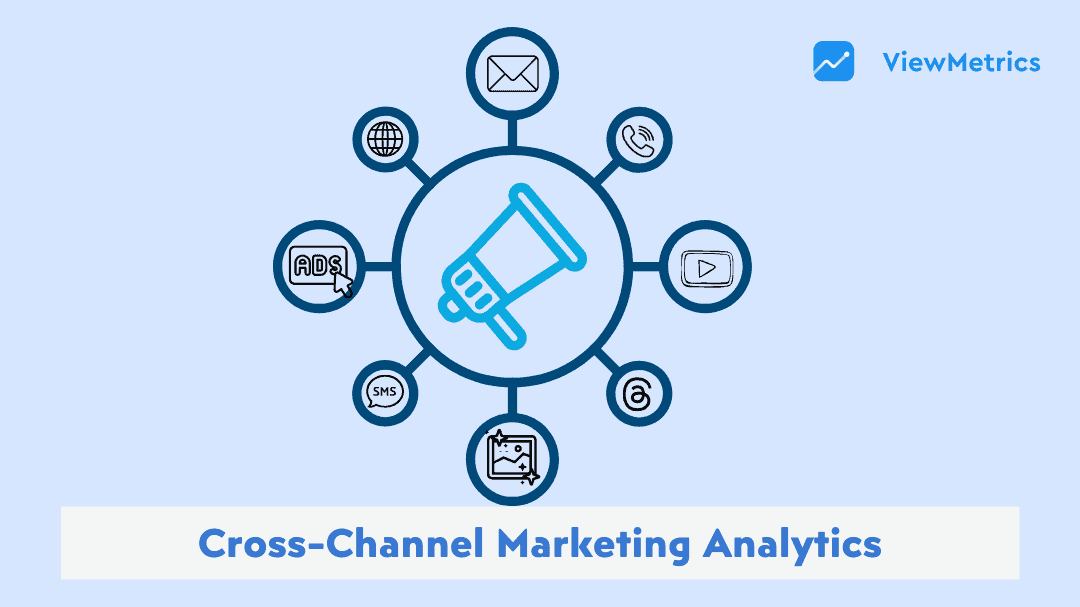
Tracking your marketing across platforms can quickly get overwhelming.
One ad is performing, another is tanking, and you’re stuck guessing what’s working. That’s where cross-channel marketing analytics steps in. It pulls all your data into one place so you can make smarter, faster decisions. In this blog, we’ll walk you through everything you need to know to get started with cross-channel marketing.
What is Cross-Channel Marketing Analytics?
Cross-channel marketing analytics is the process of collecting and analysing data from all your marketing platforms in one place, so you can see how each channel works together to drive results. Instead of checking performance in silos like email, social media, or paid ads separately, this approach helps you track the full customer journey across platforms. You get a clearer picture of what’s working, where to invest more, and how to improve your campaigns based on real insights. It helps you to connect the dots and make smarter marketing decisions.
Comparison Table: Cross-channel vs Multichannel vs Omnichannel Marketing Analytics
| Aspect | Multichannel Marketing Analytics | Cross-channel Marketing Analytics | Omnichannel Marketing Analytics |
|---|---|---|---|
| Basic Idea | Tracks performance on multiple channels, but each channel is analyzed on its own. | Connects data from different channels to understand how they work together. | Tracks the complete customer journey across all touchpoints as one experience. |
| How Data Is Collected | Data is collected separately from each platform like email, social media, paid ads, or search. | Data from different platforms is pulled into a single view for comparison and analysis. | Data is unified at the user level, often using customer IDs or behavior tracking. |
| View of the Customer Journey | Fragmented view. Each channel shows its own results without context. | Partial journey view. You can see how one channel supports or influences another. | Full journey view from first interaction to final conversion and beyond. |
| Channel Interaction | Channels work independently with little or no connection. | Channels are linked, showing how users move between them. | Channels are fully integrated and treated as part of one continuous path. |
| Use of Attribution Models | Mostly last-click or platform-specific attribution. | Uses multi-touch attribution to understand contribution across channels. | Uses advanced attribution tied to user behavior and lifecycle stages. |
| Personalization Capability | Limited personalization since data stays siloed. | Some level of personalization based on cross-channel behavior. | High personalization based on real-time customer actions and preferences. |
| Technology Setup | Simple setup using individual platform dashboards. | Requires data connectors or reporting tools to combine sources. | Needs advanced analytics platforms, CRM integration, and identity resolution. |
| Reporting Style | Separate reports for each channel like ads, email, or social media. | Combined reports showing trends, overlaps, and assisted conversions. | Unified dashboards focused on customer journeys, retention, and lifetime value. |
| Team Collaboration | Teams often work in silos, each managing their own channel. | Teams collaborate more since performance is evaluated together. | Teams align around the customer rather than individual channels. |
| Scalability | Easy to start but becomes harder to manage as channels increase. | Scales better as data is centralized. | Highly scalable but requires strong systems and processes. |
| Best Use Case | Suitable for businesses just starting with multiple marketing channels. | Ideal for growing teams that want better insights without full complexity. | Best for mature businesses focused on long-term customer relationships. |
| Level of Complexity | Low complexity and easy to manage. | Moderate complexity with better insights. | High complexity but offers the deepest understanding. |
<VMCTA1 />
Why Use Cross-Channel Analytics?
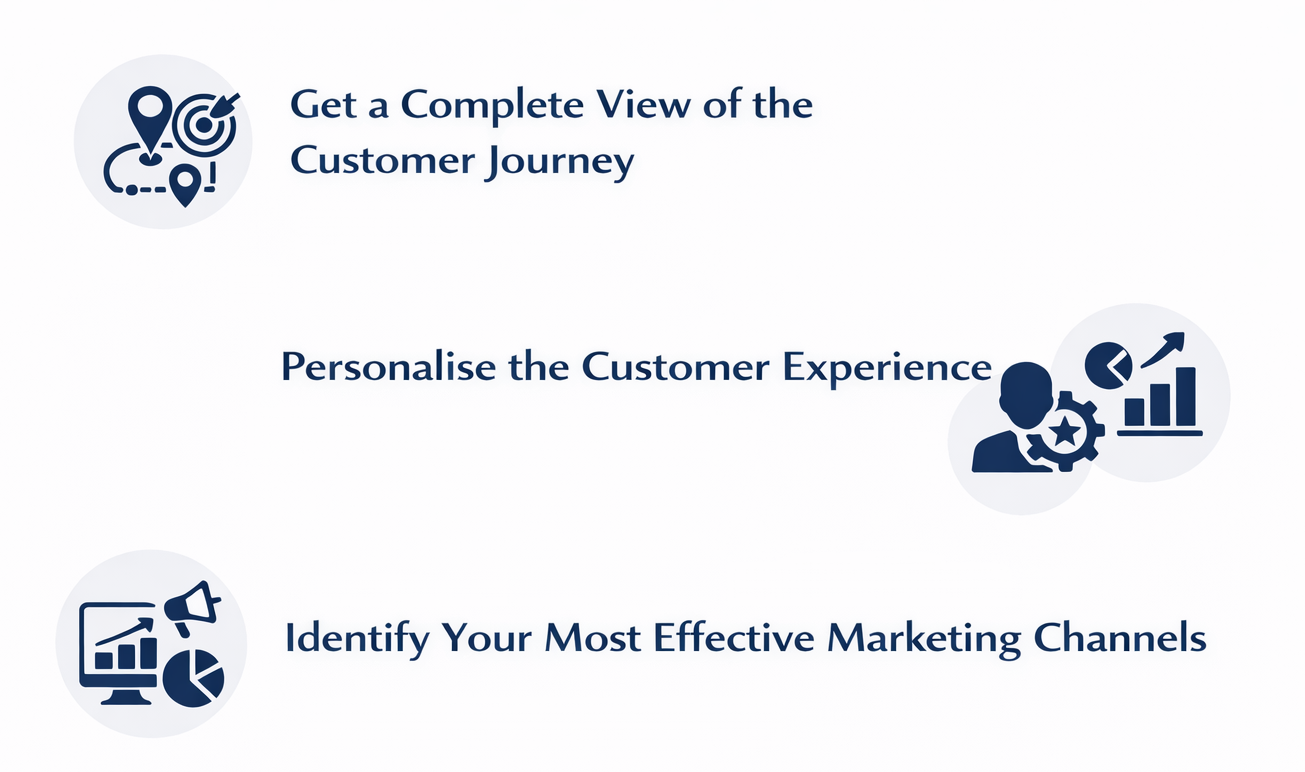
If you’re running campaigns on more than one platform, it’s easy to lose track of what’s working. Cross-channel analytics helps you bring everything together so you can see the full picture. Here’s why it matters:
-
Get a Complete View of the Customer Journey
Customers don’t just stick to one platform. They might click your ad on Instagram, read your email later, and finally buy after seeing a YouTube video. Cross-channel analytics connects the dots so you can see the full picture. It shows you how each touchpoint fits into the journey and what leads to action.
-
Personalise the Customer Experience
When you understand how people interact with your brand across channels, it becomes easier to serve them better. You can customise content, offers, and timing based on their behaviour. This makes the experience feel more relevant and improves the chances of conversion.
-
Identify Your Most Effective Marketing Channels
Not every platform performs the same. Cross-channel analytics tells you which ones are working and which ones are not worth the spend. You get to see where your traffic, engagement, and conversions are really coming from. This helps you focus your budget on what actually drives results.
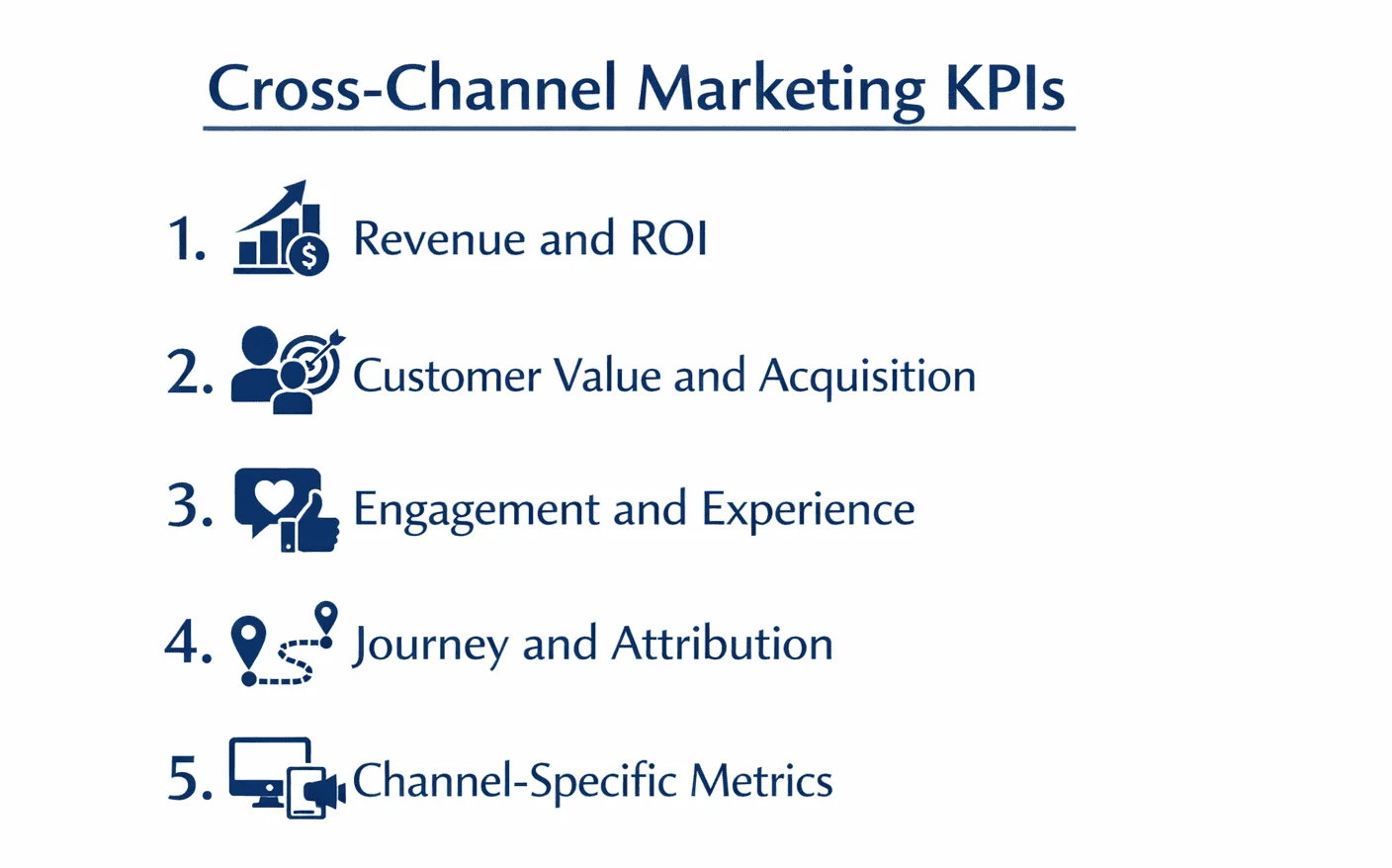
Cross-Channel Marketing KPIs
-
Revenue and ROI
When it comes to tracking how well your cross-channel campaigns are doing, revenue is usually the first thing on your mind. These KPIs help you understand what you’re getting back for every dollar you spend.
- Cross-Channel ROI/ROAS: This shows how much total revenue your campaigns generate compared to how much you spend across all marketing channels.
- Revenue per Visit or Customer: This gives you a clearer picture of how valuable each user or customer is, especially when they interact with your brand across multiple touchpoints.
-
Customer Value and Acquisition
You’re not just trying to get traffic. You want customers who stick around and bring long-term value. These KPIs show how much it costs to bring them in and how valuable they are once they’re on board.
- Customer Lifetime Value (CLV): This tells you how much revenue one customer will likely bring during their entire time with your brand.
- Customer Acquisition Cost (CAC): This helps you track how much you’re spending to bring in a new customer, spread across ads, content, and other touchpoints.
- Customer Retention Rate: This measures how many customers keep coming back. A strong retention rate usually means your overall customer experience is solid.
-
Engagement and Experience
These KPIs help you understand how well people are engaging with your brand across different platforms, and whether your messaging feels smooth and consistent.
- Cross-Channel Engagement Rate: This looks at total likes, comments, shares, clicks, and other actions across all platforms, giving you a sense of how involved your audience is.
- Consistency Score: This tracks how well your brand voice, design, and messaging line up across all channels. A consistent experience builds trust and recognition.
- Net Promoter Score (NPS): This measures how likely your customers are to recommend your brand to others. It’s a strong signal of brand loyalty and customer satisfaction.
-
Journey and Attribution
Your customer’s path is rarely a straight line. These KPIs help you understand the journey and assign value to each step, not just the final click.
- Multi-Touch Attribution: This breaks down how each channel or interaction contributes to a conversion. Whether it’s the first click, the last click, or somewhere in between, you get a more complete view of what’s working.
- Time to Conversion: This tells you how long it takes a user to go from first touch to final action. Shorter time frames often mean better targeting or messaging.
- Customer Journey Completion Rate: This measures how many users actually finish the journey you’ve designed, such as completing a purchase or signing up after going through multiple steps.
-
Channel-Specific Metrics
While the big picture is important, individual channel data still plays a role. These metrics give context to the broader KPIs above.
- Impressions, Clicks, Click-Through Rates (CTR), Cost Per Click (CPC): These are useful for zooming into the performance of specific platforms like Google Ads or Facebook.
- Email Open Rates and Click-Through Rates: These email KPIs give insight into how well your email campaigns are performing within your broader marketing mix.
<VMCTA2 />
How to Set Up Cross-Channel Analytics?
Setting up cross-channel analytics may sound technical, but it becomes manageable when broken into clear steps. Here’s how you can get started:
-
Determine Your Objectives
Start by asking what you want to measure. Are you tracking conversions, engagement, customer journeys, or something else? Clear goals make everything easier.
-
Select Relevant KPIs
Choose metrics that align with those goals. For example, if you’re tracking campaign success, you might focus on cost per acquisition, return on ad spend, or conversion rate.
-
Implement Tracking and Analytics Tools
Set up tools like Google Analytics, ViewMetrics, or UTM parameters to collect data across different platforms. Make sure everything is connected and data is flowing correctly.
-
Set Up a Multi-Touch Attribution Model
Instead of giving full credit to the first or last click, use a model that tracks every touchpoint. This gives you a more realistic view of your customer journey, especially if it spans several channels.
-
Turn Data Into Insights With Reports
Use dashboards and reports to break down what the data is telling you. Spot patterns, identify what’s working, and flag what needs attention.
-
Take Action
Use the insights to tweak your strategy. Maybe one channel is performing better than you thought, or another needs rethinking. Don’t let the data sit there. Use it to grow.
Best Tools for Cross-Channel Analytics
Cross-channel analytics tools help businesses track, compare, and understand performance across multiple marketing platforms from one place, making smarter, data-driven decisions easier.
Closing Thoughts
Cross-channel marketing analytics helps you move from guesswork to clarity. When all your data comes together, it becomes easier to see what is driving results and where you should focus next. As your marketing efforts grow across platforms, having a clear view of how everything connects will help you make better decisions and build campaigns that actually perform.
Frequently Asked Questions (FAQs)
-
How is cross-channel analytics different from single-channel analytics?
Single-channel analytics looks at one platform at a time, like only tracking Instagram or email. Cross-channel analytics connects data from all your platforms to give you one full picture of how your entire marketing works together.
-
What metrics are used in cross-channel marketing analytics?
You’ll usually track ROI, cost per acquisition, conversions, engagement, retention, and customer lifetime value. These help you see what’s working across channels.
-
How does cross-channel analytics improve ROI?
It shows you which channels work well together, so you can shift your budget to what actually drives results. This helps avoid wasting money on underperforming campaigns.
-
Is cross-channel marketing analytics the same as omnichannel analytics?
They are related but not identical. Cross-channel focuses on comparing performance across platforms. Omnichannel focuses on giving customers a smooth, connected experience no matter where they interact.
-
What challenges are common in cross-channel marketing analytics?
You might face issues like data being stuck in silos, tracking mismatches, privacy rules, or trouble comparing metrics from different platforms.
-
How does cross-channel analytics help with attribution?
It lets you see the full customer journey, showing how multiple touchpoints contribute to a conversion. This is better than just crediting the last click.
-
Can small businesses use cross-channel marketing analytics?
Yes, absolutely. You can start with free or budget tools to track your main platforms. As your business grows, you can invest in more advanced options.
Related Posts
-

Users visiting your website create a history of valuable data insights that you can use…
-

Summary for the Blog Marketing analytics tools are crucial for data-driven decisions, optimizing ROI, understanding…
-

Tracking digital marketing performance across multiple platforms can be time-consuming and confusing. Jumping between Google…
-

{ “@context”: “https://schema.org”, “@graph”: [ { “@type”: “ItemList”, “name”: “Types of Content”, “itemListElement”: [ {…
-

Explore the top KPIs for email marketing to enhance campaign effectiveness. Learn how metrics like…